On-Premise 101

On-Premise 101

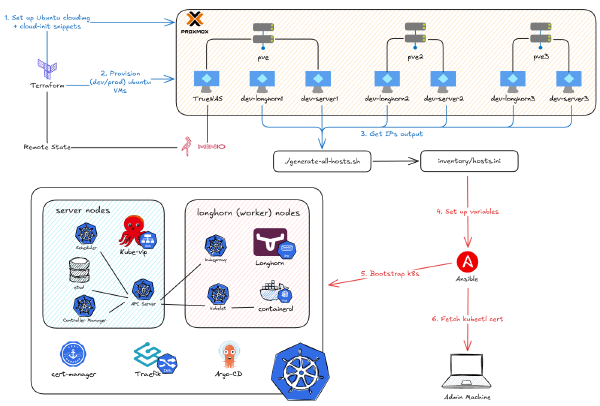
On-Premise 101 (Part 5): From Terraform VMs to a K8s Cluster with Ansible

On-Premise 101 (Part 5): From Terraform VMs to a K8s Cluster with Ansible

·4384 words·21 mins· loading · loading
People are often scared to learn Kubernetes because it’s difficult to set up an environment to play around with. Sure, you can use a project like minikube to learn on your own, but running it on your laptop seems limited, and you may not get to experience all the awesome features Kubernetes offers (remember, it was born for high availability). Or, if you have money, you can use a managed Kubernetes cluster from one of the cloud providers. Often, they’ve abstracted away so many things under the hood that you only need to learn kubectl and you’re good to go.
On-Premise 101 (Part 2): Proxmox, the "Glue" for My Homelab

On-Premise 101 (Part 2): Proxmox, the "Glue" for My Homelab

·1641 words·8 mins· loading · loading
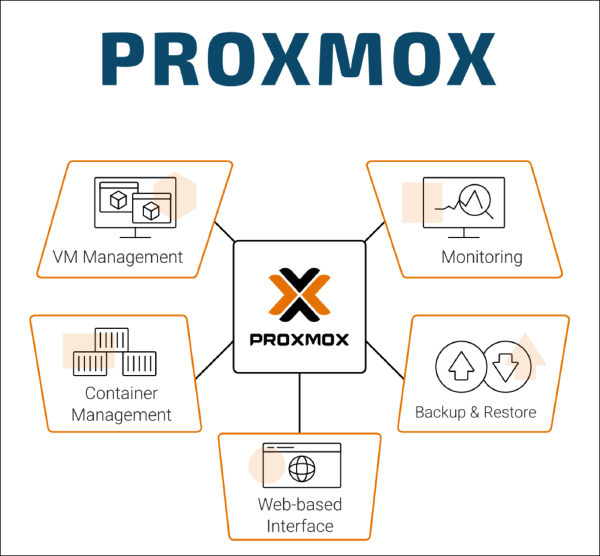
In the previous part, we covered how I started playing around with my hand-me-down computer and then escalated to building a whole 3-node cluster. It’s been a 3-year journey, and there have been so many changes to the software stack I host. But no matter what, there’s one thing I’ve used consistently from beginning to end: Proxmox (Hypervisor). So before we dive into how I deploy my applications on Docker or Kubernetes, I’ll show you the glue that connects the hardware we just built to all the software we’re going to deploy.
On-Premise 101 (Part 1): Building a 3-Node Cluster

On-Premise 101 (Part 1): Building a 3-Node Cluster

·2712 words·13 mins· loading · loading
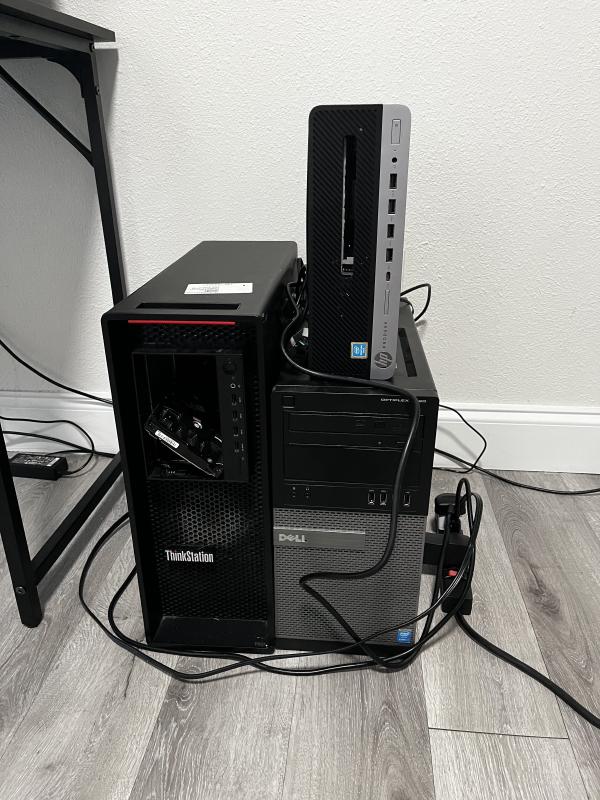
You might have heard about the recent AWS outage that caused many services to go down. To think that half of the internet relies on a single service is crazy, even if it might be the best in its field. The engineers at AWS have done many things to prevent this, such as high availability, multi-region, zones, etc., but if a critical part of it still goes down, the whole thing goes down too. Therefore, if you don’t want to give all your money and trust to a single company, you might want to explore the on-premise option, which is self-hosting.