My whole setup in a single Nix flake. The NixOS desktop, the home server with its Docker containers and encrypted secrets, and the macOS laptop share modules and home configuration, with dependency updates and server deployment automated. It also runs the agent tooling I use for daily work.
Two independent Talos Kubernetes environments, dev on Proxmox and prod on Google Compute Engine, provisioned with OpenTofu and GitHub Actions. Each cluster runs its own Argo CD for GitOps, Doppler and External Secrets supply credentials, and prod workers scale with Cluster Autoscaler including a Spot group. It hosts the marketplace and payment gateway projects.
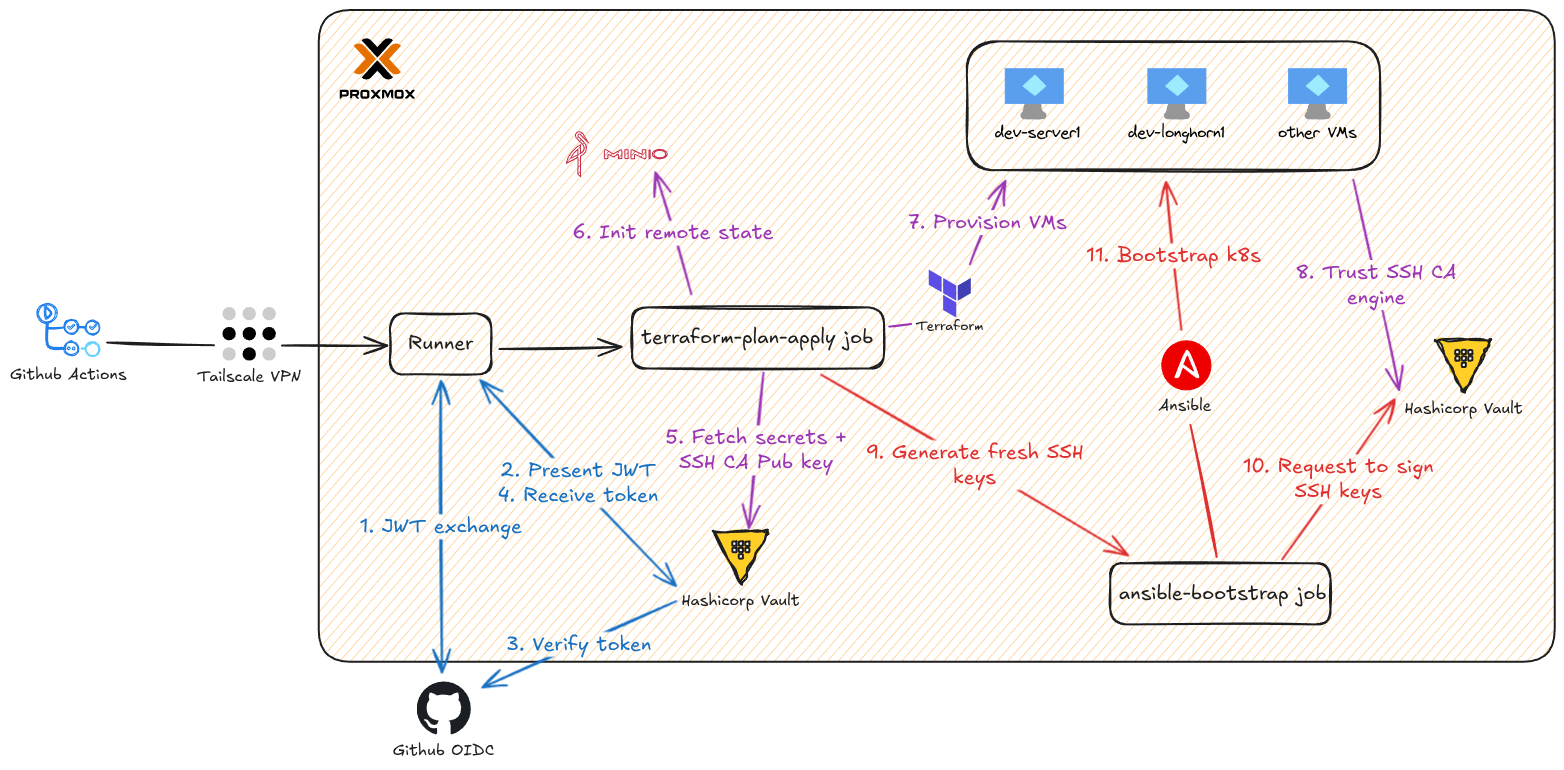
This is Part 2 of the Hashicorp Vault series. Part 1 covered bootstrapping and configuring HashiCorp Vault (the one-time terraform-admin work) and the design goals for Zero Trust secrets management.
People are often scared to learn Kubernetes because it’s difficult to set up an environment to play around with. Sure, you can use a project like minikube to learn on your own, but running it on your laptop seems limited, and you may not get to experience all the awesome features Kubernetes offers (remember, it was born for high availability). Or, if you have money, you can use a managed Kubernetes cluster from one of the cloud providers. Often, they’ve abstracted away so many things under the hood that you only need to learn kubectl and you’re good to go.
I’m the kind of person who will happily spend 10 hours building an automation script just to save 10 minutes of manual work every day. If that sounds like you, you’re in the right place.
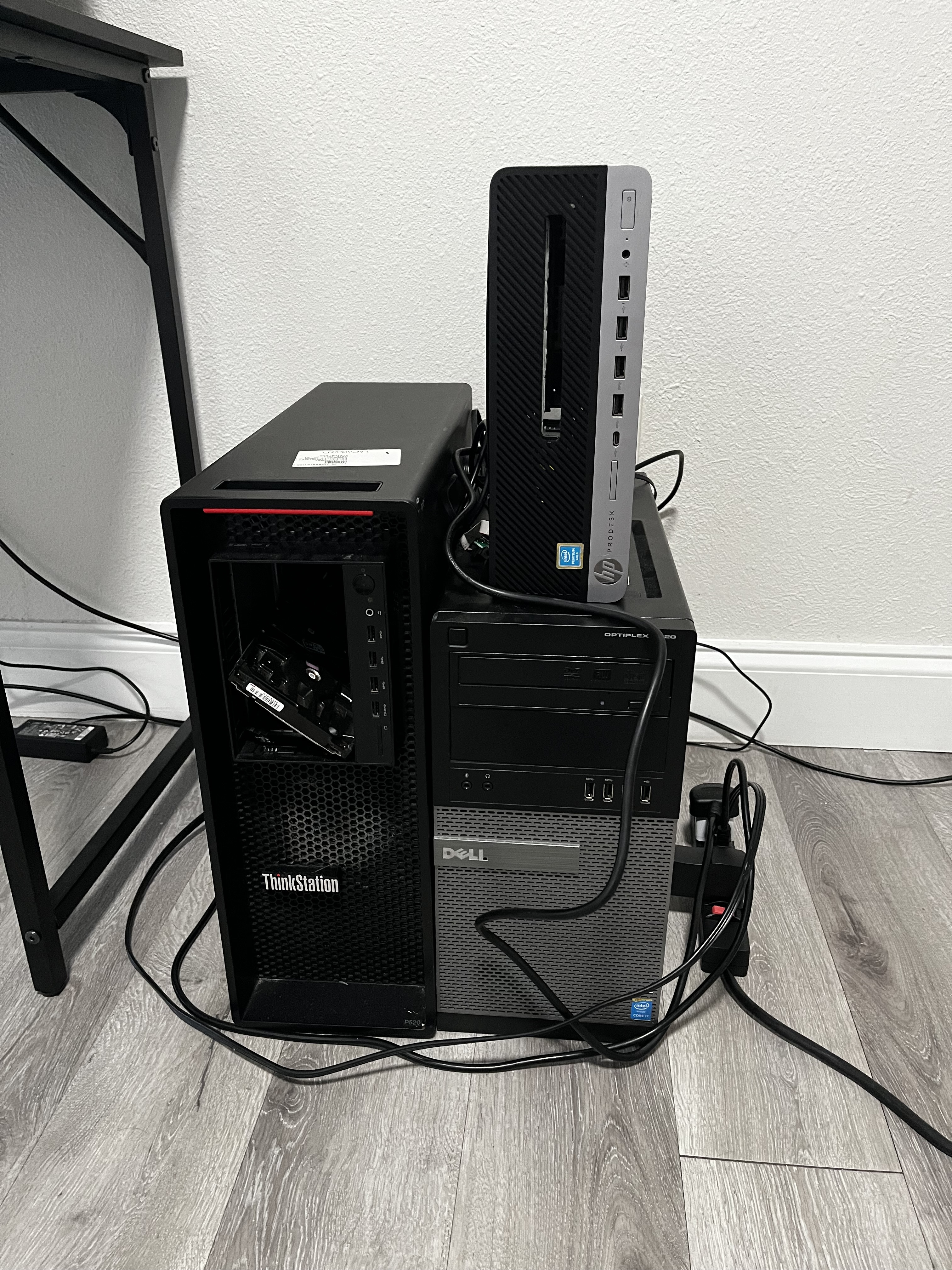
In the previous parts of this series, we went from a single hand-me-down PC to a full 3-node cluster, and then we installed Proxmox as our hypervisor. We even managed to pass through a GPU to a VM for near-native performance.
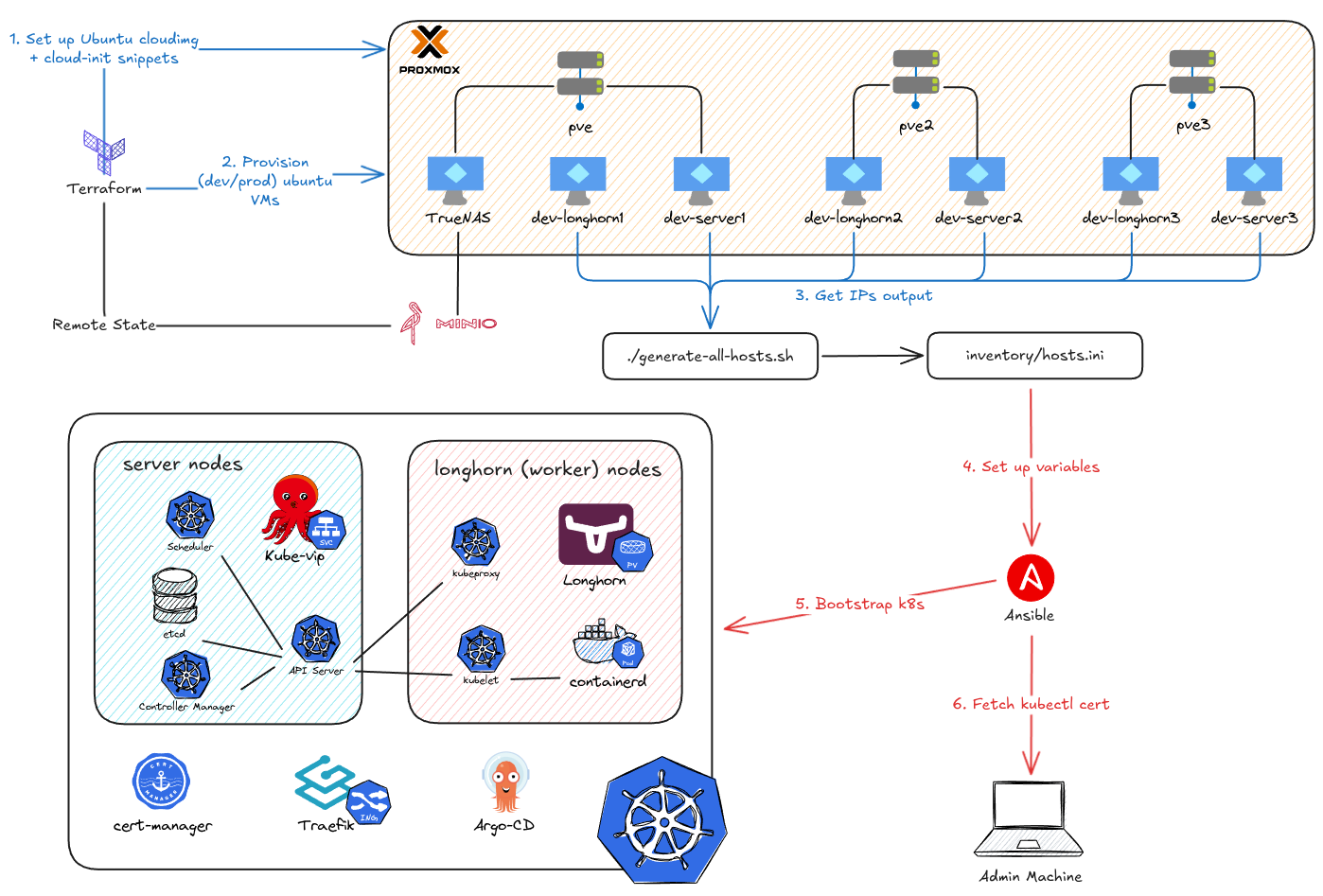
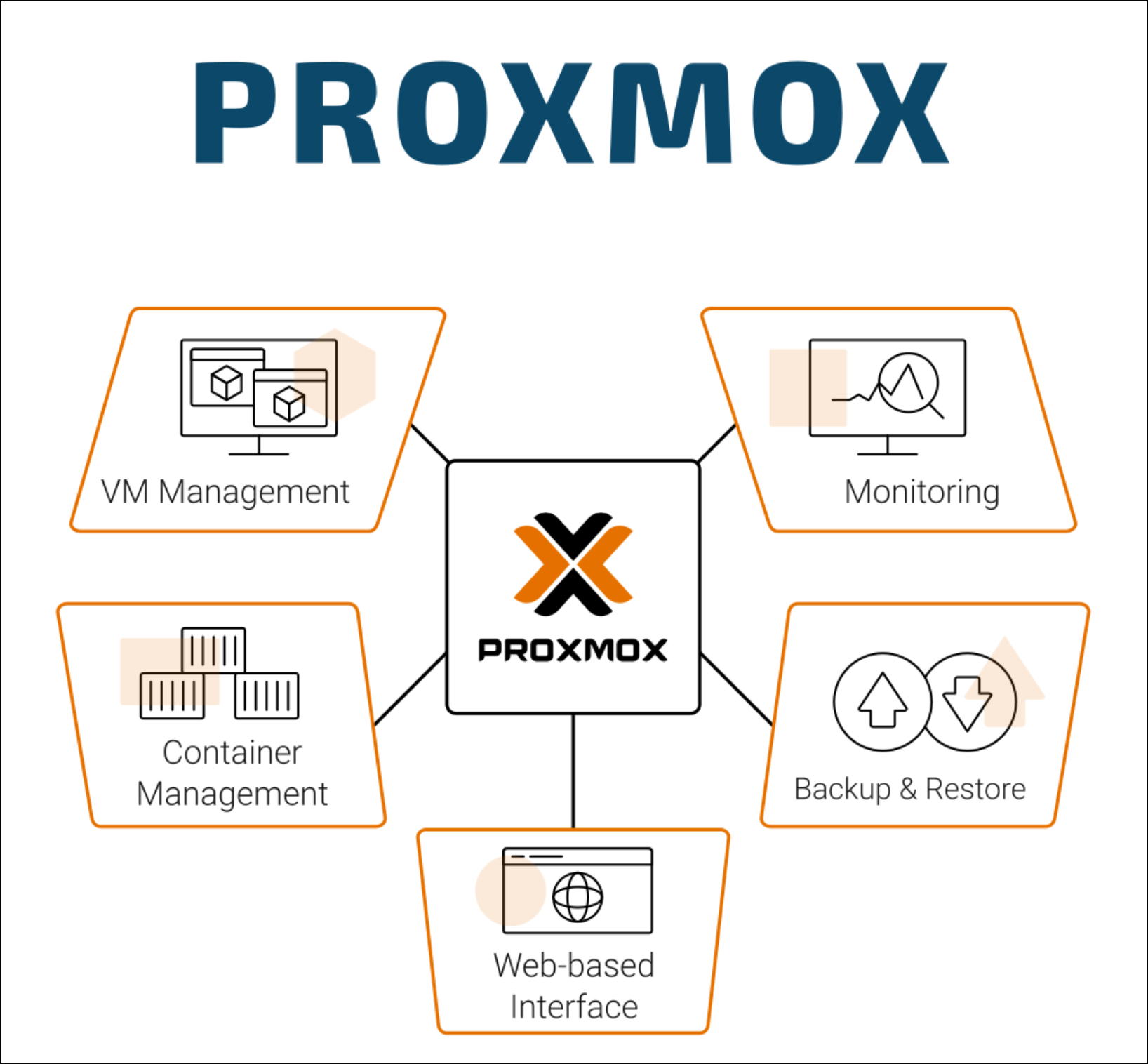
In the previous part, we covered how I started playing around with my hand-me-down computer and then escalated to building a whole 3-node cluster. It’s been a 3-year journey, and there have been so many changes to the software stack I host. But no matter what, there’s one thing I’ve used consistently from beginning to end: Proxmox (Hypervisor). So before we dive into how I deploy my applications on Docker or Kubernetes, I’ll show you the glue that connects the hardware we just built to all the software we’re going to deploy.
You might have heard about the recent AWS outage that caused many services to go down. To think that half of the internet relies on a single service is crazy, even if it might be the best in its field. The engineers at AWS have done many things to prevent this, such as high availability, multi-region, zones, etc., but if a critical part of it still goes down, the whole thing goes down too. Therefore, if you don’t want to give all your money and trust to a single company, you might want to explore the on-premise option, which is self-hosting.
If you thought the biggest gaming news was the upcoming Switch 2, think again. The emulation community has made a breakthrough: you can now run Nintendo Switch games on your iPhone or iPad at buttery-smooth 60FPS—all offline, with no jailbreak, no shady VPNs, and zero sketchiness.